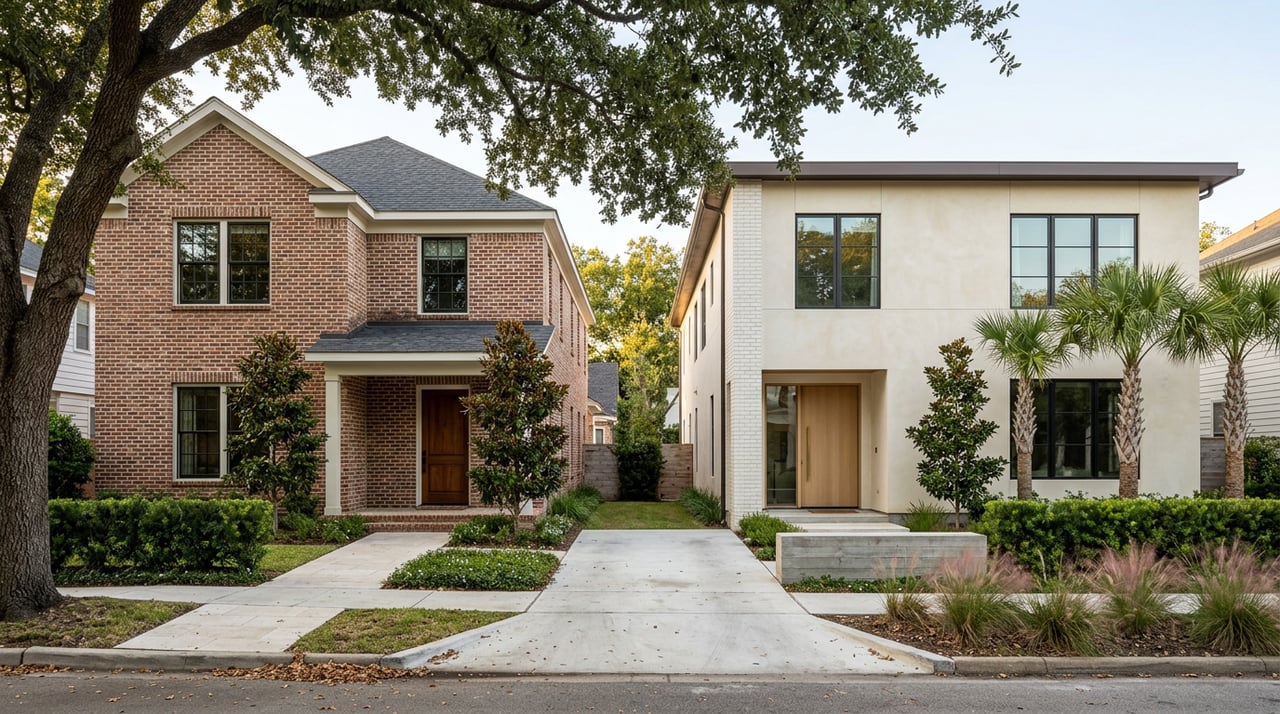
Have you ever turned a corner in Houston and felt like you stepped into a different era? One block features a porch-front bungalow with tapered columns, the next reveals a glassy modern or a brick classic. If you are browsing homes or preparing to buy, understanding what you are seeing helps you shop with confidence. This guide shows you how to spot Houston’s signature architectural styles, where they tend to cluster, and what each means for maintenance, renovation, and resale. Let’s dive in.
Why Houston shows many styles
Houston’s housing timeline stretches from late 19th-century streetcar neighborhoods to large postwar suburbs and major 21st-century infill. That mix left the city with intact bungalow districts, mid-century tracts, and a wave of contemporary construction. The City of Houston’s preservation resources explain how these periods shaped today’s blocks and document character-defining details in areas like the Heights. You can explore that background in the City’s design guide for the Heights historic districts, which also outlines how exterior changes are reviewed in those areas. See the City’s Heights Historic District Design Guidelines.
Climate also plays a role. Houston’s hot-humid weather and frequent heavy rain influence rooflines, eaves, and exterior materials. Recent FEMA and Harris County Flood Control District map updates have expanded some flood-zone boundaries, which can affect siting, elevation, insurance, and resale. Local reporting summarizes these changes and why they matter for buyers. For a broad overview, see the Houston Chronicle’s explainer on how new flood maps could impact properties.
How to spot Houston’s signature styles
Craftsman bungalow and early cottages
- Visual cues: Low-pitched gabled or hipped roof, broad front porch with tapered square columns on brick or stone piers, exposed rafter tails, grouped double-hung windows, wood siding or shingle accents.
- Where you see them: Houston Heights historic districts, parts of Montrose, and scattered inner-loop blocks.
- Why buyers like them: Human scale, front-porch lifestyle, and handcrafted details. Often smaller than nearby new builds, which can help with price entry.
- Practical notes: Many sit on pier-and-beam foundations with older systems. Budget for foundation, timber, and termite inspections. In designated historic districts, exterior changes generally require review. The City’s Heights guidelines explain what typically needs approval.
Victorian and Queen Anne cottages
- Visual cues: Asymmetrical façades, patterned shingles, spindlework or gingerbread trim, and occasionally turrets or projecting bays.
- Where you see them: Select blocks in the Heights and a small number of inner-loop landmark areas.
- Why buyers like them: Memorable curb appeal and ornate character.
- Practical notes: Decorative woodwork and complex rooflines can mean higher exterior maintenance and careful restoration practices.
American Foursquare, Colonial Revival, Tudor, and Mediterranean revival
- Visual cues: These revival-era homes vary by subtype. Colonial tends to be symmetrical with classical entries. Tudor leans on steep gables and half-timbering. Mediterranean or Spanish revival often uses stucco, arches, and terra-cotta tile.
- Where you see them: River Oaks, Courtlandt Place, and other early 20th-century neighborhoods. River Oaks is a well-known example of a historically deed-restricted area. Learn more about the neighborhood’s context on the River Oaks summary.
- Why buyers like them: Provenance, mature lots, and enduring architecture.
- Practical notes: Many feature durable masonry and tile roofs. Repairs to historic materials like terra-cotta tile or leaded glass usually require specialists.
Mid-century modern
- Visual cues: Long horizontal lines, open floor plans, large windows or clerestories, indoor-outdoor flow, and minimal ornamentation. Roofs are often flat or low slope.
- Where you see them: Pockets in Tanglewood, Briargrove, Memorial, and Del Monte, plus scattered inner-loop sites. Local advocates document and tour noteworthy examples through Houston Mod.
- Why buyers like them: Clean lines, daylight, and easy single-level living.
- Practical notes: Original large glass walls and low-slope roofs need attentive maintenance, including drainage and flashing upgrades. Preservation-minded buyers often value intact period details.
Ranch and postwar suburban homes
- Visual cues: Low single-story profile, long façade, attached garage, and simple plans. Built widely in the 1950s and 1960s.
- Where you see them: Meyerland, Willow Bend, and many southwest inner-ring areas. For Meyerland’s background, see the Meyerland overview.
- Why buyers like them: Single-level convenience and larger lots by city standards.
- Practical notes: Many have been elevated or remodeled. Flood history is a key factor in certain areas, so always confirm maps, elevation certificates, and disclosures.
Contemporary stucco and Mediterranean-leaning new construction
- Visual cues: Smooth stucco façades, large picture windows, metal or tile accents, and sculptural massing. Common on infill sites where older homes were replaced.
- Where you see them: Across inner-loop blocks and many suburbs.
- Why buyers like them: Modern layouts, tall ceilings, and new-home systems.
- Practical notes: Stucco and EIFS cladding must be detailed correctly in hot-humid climates. Poorly detailed assemblies can trap moisture. Building-science research shows that drainage-type EIFS and well-executed water-resistive barriers can perform well, but installation quality is critical. For homes with these claddings, request a specialized stucco or EIFS inspection and moisture scans. Review the ORNL paper on EIFS detailing and moisture management.
Traditional brick and masonry
- Visual cues: Full brick façades or brick veneer on classic forms and newer neo-traditional builds.
- Where you see them: Throughout the city, from early 20th-century homes to modern infill.
- Why buyers like them: Timeless look, perceived durability, and lower routine exterior maintenance.
- Practical notes: Expect periodic mortar repointing and careful flashing at openings. Pay attention to lintels, weeps, and below-grade drainage.
Shotgun houses, worker cottages, and Freedmen’s Town vernacular
- Visual cues: Narrow, one or one-and-a-half-story frame cottages, often on raised foundations with linear floor plans.
- Where you see them: Historic pockets in the inner loop, including Freedmen’s Town in the Fourth Ward. The district is nationally recognized for its cultural and historical significance. Explore the context through the Freedmen’s Town landscape profile.
- Why buyers like them: Deep sense of place and authenticity.
- Practical notes: Preservation context is sensitive. Confirm any review requirements before planning exterior changes in heritage areas.
Maintenance, renovation, and resale basics
- Older wood-frame cottages and bungalows: Confirm foundation type, check for termite or fungus history, and document updates to wiring, plumbing, and HVAC. Pier-and-beam homes often benefit from moisture control under the house. The City’s Heights guidelines are a helpful primer on character-defining elements and review processes.
- Mid-century modern specifics: Inspect roof slope, concealed gutters, and flashing. Replacing original windows or altering rooflines can affect appeal for preservation-minded buyers, as groups like Houston Mod note in their documentation.
- Stucco and EIFS: Insist on a dedicated exterior inspection. Look for evidence of proper flashing, weep screeds, and modern drainage details. The ORNL study on EIFS moisture performance provides useful context.
- Brick and stone: Durable, but plan for repointing and proper water management at all openings and transitions.
- Flood risk and elevation: Many mid-century ranches and some early bungalows were built on low pads. Draft mapping shows a meaningful expansion of properties in higher-risk zones. Always check FEMA and HCFCD maps, request elevation certificates, and review past-damage disclosures. For a clear summary of the mapping changes, see the Chronicle’s piece on new flood-map impacts.
- Historic districts and deed restrictions: Exterior changes on properties within City of Houston historic districts or deed-restricted neighborhoods often need review. Confirm rules before planning façade work or street-facing additions. Start with the City’s historic-preservation resources.
Where styles cluster in Houston
- Heights and Woodland Heights: Craftsman bungalows, Queen Anne cottages, and cohesive early fabric documented by the City’s Heights design guidelines.
- Montrose and Courtlandt Place: Eclectic bungalows and revival architecture on urban lots. For a neighborhood deep-dive, see the First Montrose Commons historic designation report.
- River Oaks and nearby enclaves: Large revival-era estates and carefully designed streetscapes.
- Tanglewood, Briargrove, Memorial, and Del Monte: Pockets of mid-century modern and architect-driven homes documented by Houston Mod.
- Meyerland, Willow Bend, parts of Westbury: Ranch and mid-century homes that have seen elevating and remodeling over time. Neighborhood overview at Meyerland.
- Freedmen’s Town in the Fourth Ward: Historically significant small-frame cottages and shotgun-plan houses. Explore the area’s story via Freedmen’s Town. Preservation Houston offers citywide context and tours that celebrate local architecture and history. See Preservation Houston’s background.
Choosing what fits your life
Start with how you want to live. If a front porch and walk-up charm speak to you, a Craftsman bungalow could be the right fit. If daylight, clean lines, and indoor-outdoor flow top your list, a mid-century modern may check the boxes. If you want new systems and taller ceilings, consider contemporary stucco or brick infill.
Next, align your shortlist with maintenance and risk. In older homes, plan for foundation, system updates, and careful exterior care. For stucco or EIFS, budget for a specialized inspection. In any area with known flood history, confirm maps, elevation, and past-damage disclosures before you fall in love with a house.
Finally, consider any review requirements. In City of Houston historic districts, exterior changes usually need approval, and deed restrictions can shape what you can build. A little homework now can save you time and protect value later.
Ready to explore homes by style and neighborhood, and to weigh the trade-offs with a trusted advisor? Connect with Nan & Co Properties for tailored guidance, private tours, and a plan that fits how you want to live in Houston.
FAQs
What are the most common historic home styles in Houston’s Heights?
- Craftsman bungalows and early cottages are prevalent, with some Queen Anne examples. The City’s Heights design guide documents their defining features and review processes for exterior changes.
How do new flood maps affect buying a mid-century ranch in Meyerland?
- Recent FEMA and HCFCD map updates expanded some higher-risk zones. Always check current maps, request the elevation certificate, and review past-damage disclosures. See the Chronicle’s overview of flood-map impacts for context.
What should I inspect on a Houston home with stucco or EIFS cladding?
- Ask for a specialized stucco or EIFS inspection, moisture scans, and documentation of flashing, weep screeds, and a proper drainage plane. Building-science research notes that correct detailing is crucial in hot-humid climates.
Do I need approval to alter a façade in a City of Houston historic district?
- Yes, exterior changes in designated historic districts typically require review under City guidelines. Check the applicable design standards before planning additions or visible alterations.
Where can I find mid-century modern homes inside the Loop and nearby?
- Pockets appear in Tanglewood, Briargrove, Memorial, and Del Monte, with additional scattered examples closer in. Local advocates like Houston Mod document notable properties and neighborhoods.
What sets River Oaks architecture apart from other Houston neighborhoods?
- River Oaks features significant revival-era estates influenced by historic deed restrictions that shaped design and neighborhood form, contributing to its cohesive architectural presence.