Buying your first home inside Houston’s Inner Loop can feel exciting and overwhelming at the same time. You want a vibrant neighborhood, a smart commute, and a home that holds up in our heat and storms. The good news: 2025 has given first-time buyers a more balanced playing field, so you can make thoughtful choices instead of rushed ones. In this guide, you’ll learn how today’s market affects you, what to expect in top urban neighborhoods, how to check flood and maintenance risks, and how Texas contracts and inspections work so you can move with confidence. Let’s dive in.
The 2025 market, in plain English
Greater Houston shifted toward a more balanced market in 2025, which generally gives buyers more time and negotiating room compared with a fast seller’s market. According to the Houston Association of Realtors, the region delivered a strong, more balanced year in 2025, with the median single-family price around $335,000 for that period. Neighborhoods and price tiers still vary, but you can expect less sprinting and more strategy in many Inner Loop pockets. Start with current local data and then tailor your offer terms to each street and property type. HAR’s 2025 market summary is a helpful pulse check.
Neighborhood snapshots inside the Loop
Montrose
Montrose blends historic bungalows, mid-century multi-units, infill townhomes, and boutique condos into one of Houston’s most walkable arts-and-dining hubs. Lots are smaller, and parking can be tight in some areas. Watch for lower-elevation parcels that may carry higher flood or insurance considerations. For a quick feel of daily errands and dining on foot, check Walk Score’s Houston page.
The Heights
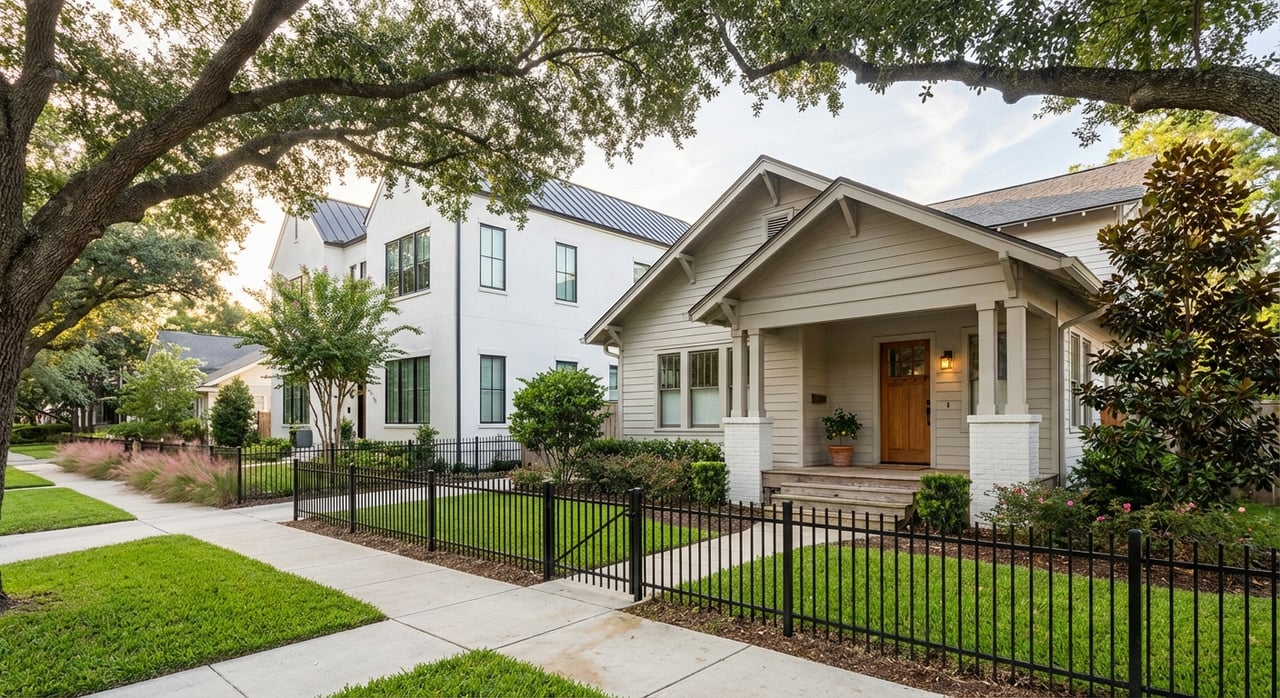
The Heights offers tree-lined streets, preserved and renovated early 20th-century bungalows, and newer townhomes. Many homes have more yard space than you’ll see in Montrose. Well-maintained historic properties often draw strong interest, so plan ahead on offer strategy and timing.
Midtown
Midtown is dense and transit friendly, with condos, apartments, and infill townhomes steps from dining and nightlife. You get quick access to downtown and the Texas Medical Center via METRORail. Some buildings have limited parking, so confirm garage and guest options early. Explore stops and routes on METRORail’s line maps.
EaDo (East Downtown)
EaDo has transformed from an industrial corridor into a mix of townhomes, loft conversions, and apartments near stadiums and new restaurants. It often prices more affordably than Montrose or The Heights for similar proximity to downtown. Construction activity and changing adjacent uses are part of the landscape, so weigh your tolerance for active development.
What to do before you tour
Use this checklist to narrow your search and avoid surprises:
- Get a true pre-approval, not just a pre-qualification. Budget for your option fee, earnest money, and inspections.
- Map your commute. Confirm travel times at rush hour and explore METRORail routes if you prefer transit.
- Check walkability. Use Walk Score to preview errands and dining access.
- Check flood risk by address on FEMA’s Map Service Center. Start with the official panel and note Letters of Map Change. Use the FEMA MSC search.
- Layer in local flood data. The City’s floodplain office provides local tools and guidance. See the Houston Permitting Center’s floodplain resources.
- Review taxes. Pull property tax history and taxing units on HCAD. Do not assume a flat citywide rate.
- Note HOA or condo factors. If the home is in a mandatory association, plan for fees and resale documents. TREC publishes the standard contract forms and addenda used to structure these details. See TREC’s contracts page.
- Browse active listings and recent sales on HAR to understand price and days on market for your target streets.
How Houston’s urban homes are built
Inside the Loop, you’ll see a mix of 1920s–1950s bungalows, slab-on-grade new construction, 2–3 story townhomes on tight lots, and mid to high-rise condominiums near downtown. Houston does not use a conventional citywide zoning code, so development is shaped by deed restrictions, historic-district rules, and building codes. The benefit is variety and proximity to amenities. The tradeoff is faster land-use change and an occasional abrupt neighbor use, which makes street-level due diligence essential.
Houston’s clay soils also matter. Long dry spells or poor drainage can move slabs and cause foundation distress. If your inspection shows cracks, sticking doors, or patchwork pier repairs, budget for a specialist opinion from a structural engineer or qualified foundation contractor. This quick primer on what causes foundation issues in Houston explains why.
Flood risk made simple
Flood exposure is the single biggest near-term risk for many Inner Loop homes. Take these steps on every address:
- Check the official FEMA panel and any Letters of Map Change on the FEMA Map Service Center.
- Use local mapping and resources from the City’s Floodplain Management Office to see known conveyance, street flooding, or elevation contexts that may not appear on FEMA maps.
- Ask for any elevation certificates, past flood claims, and current flood policy details. Texas disclosure rules require certain insurance information in the Seller’s Disclosure Notice.
- If the home sits near a bayou, detention pond, or low spot, consider a surveyor or civil engineer opinion and get an insurance quote early.
Inspections you should expect
Texas-licensed inspectors use the TREC Property Inspection Report (REI 7-6) and follow state Standards of Practice. Expect a written report with photos and detailed notes. Learn the basics on TREC’s inspection report form.
Schedule your general inspection during the option period and be ready to order specialty follow-ups if flagged. Common add-ons in Houston include:
- WDI/termite inspection
- Sewer-scope of the main line
- Foundation or structural engineer review
- Roof evaluation
- Moisture or mold testing when there is a known flood history
The Texas option period, explained
Most resale purchases use TREC’s One to Four Family Residential Contract. In that contract, the “option period” is a negotiated window where you pay an option fee in exchange for an unrestricted right to terminate within that time. Days are counted in calendar days and start the day after the effective date. The option fee and earnest money must be delivered on time, exactly as the contract states, or you can lose your easy exit right during the option period. Many Inner Loop deals negotiate about 3 to 7 days for the option period, but the exact term depends on the property and competition. Review TREC’s guidance and FAQs on deadlines and delivery on TREC’s FAQ page, and see the standard forms on TREC’s contracts page.
Red flags to watch for
- Foundation movement or evidence of prior pier work. Confirm with a specialist if your inspector sees signs of movement. See this overview of Houston foundation issues.
- Past flood or water intrusion. Look for replaced lower drywall, stained baseboards, or elevated mechanicals. Cross-check the address on the FEMA MSC and ask for documentation.
- Unpermitted or nonconforming work. Ask for receipts, permits when applicable, and contractor info for significant additions or mechanical changes.
- Electrical or HVAC capacity that is inadequate for Houston’s heat. Ask your inspector for age and remaining life on major systems.
- Parking constraints and drainage. Confirm garage and street options and verify how water moves away from the structure during heavy storms.
Commute, budget, and lifestyle tradeoffs
Balance your must-haves with what each block offers:
- Transit and time: Check routes and stops on METRORail. Validate door-to-door commute times at your actual hours.
- Walkability and errands: Use Walk Score and scout local shopping corridors to preview daily life.
- Flood and elevation: Combine FEMA maps, city resources, seller disclosures, and any elevation certificates. Plan for insurance and mitigation as needed.
- Property taxes: Pull history and taxing units on HCAD. Factor in exemptions if you qualify.
- Parking and access: Tight lots and narrow streets can limit options. Confirm HOA or condo rules for guests.
- HOA or condo fees: Review the resale certificate, coverage, and any special assessments using the standard TREC addendum where applicable.
Your 8-step first-time buyer roadmap
- Financial prep. Secure a lender pre-approval and set aside cash for the option fee, earnest money, and inspections.
- Shortlist neighborhoods. Use HAR data, Walk Score, FEMA, and HCAD to focus on blocks that fit your commute, budget, and risk comfort.
- Hire a local buyer’s agent. Ask for comps, recent offer norms, and block-level context for your short list.
- Tour and target. When you find the one, align on offer terms: option days and fee, earnest money, and any appraisal or finance protections.
- Execute and calendar deadlines. Deliver option fee and earnest money immediately per contract. Book your inspection for day one of the option window.
- Inspect and negotiate. Review reports, get any specialty evaluations, and request repairs or credits. If issues are too big, terminate within the option period.
- Appraisal, title, and insurance. Work with title on exceptions, confirm your owner’s title policy customs, and finalize hazard and flood insurance.
- Move-in plan. Walk systems at move-in and address immediate items like gutters, grading, HVAC service, and duct sealing.
Buying inside the Loop rewards preparation. When you combine a balanced 2025 market with disciplined flood and maintenance checks, a clear plan for inspections and deadlines, and a neighborhood that fits your daily life, you give yourself the best chance at a smooth first purchase.
If you want a thoughtful, concierge-level partner for your Inner Loop search, connect with Nan & Co Properties. We pair deep Houston expertise with clear guidance so you can buy with confidence.
FAQs
What should first-time buyers know about Houston’s 2025 market?
- The region moved toward a more balanced market in 2025, which typically gives you more time and leverage. Start with HAR’s 2025 market overview and then assess each micro-market.
How do I check a Houston home’s flood risk before touring?
- Run the address on the FEMA Map Service Center, add local context from the City’s floodplain office, and ask for elevation certificates and insurance history.
What is the Texas option period and why does it matter?
- It is a negotiated window where you pay a fee for the right to terminate for any reason within that time. Deadlines are strict and in calendar days. Review TREC’s FAQs and the standard TREC forms.
Which inspections are common for Inner Loop homes?
- In addition to a general inspection that follows TREC’s report form, common add-ons include WDI, sewer-scope, foundation or structural engineer opinions, and roof evaluations.
How do property taxes vary across Houston addresses?
- Taxes depend on the combination of city, county, school district, and any special districts. Use HCAD to see the specific taxing units and history for each property.