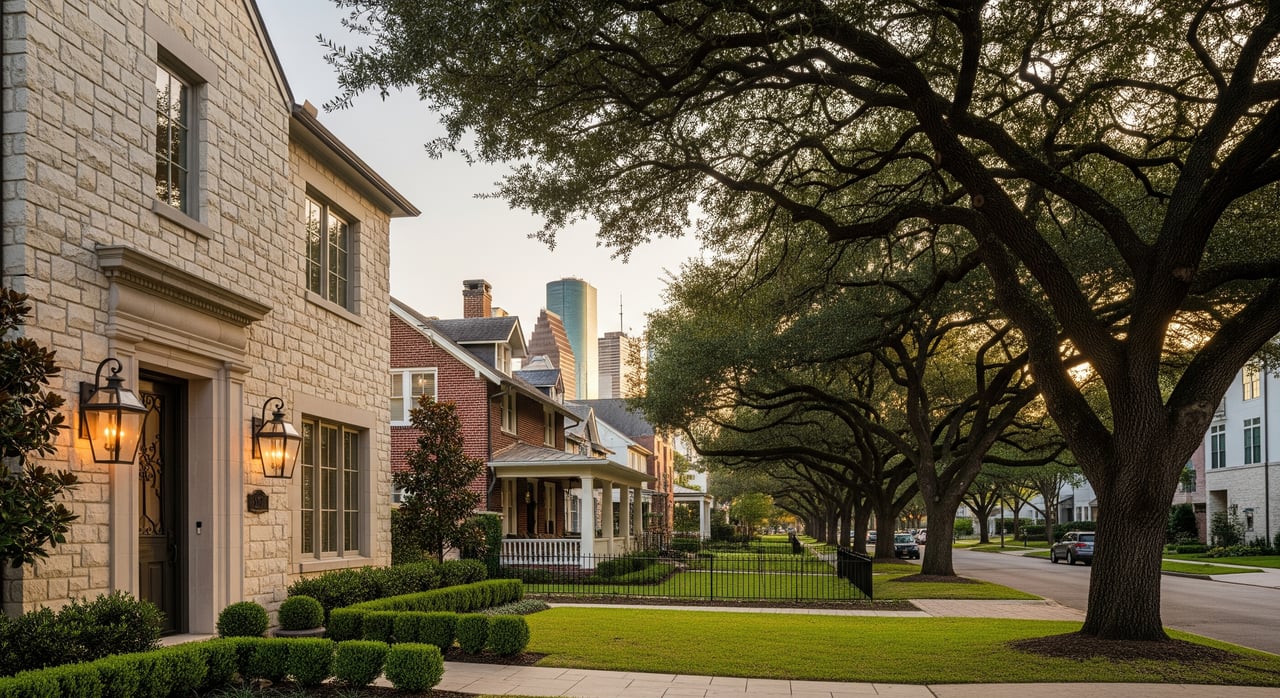
Trying to choose between West U, the Heights, and Montrose inside Houston’s Loop? You are not alone. Each offers a distinct lifestyle, housing mix, and commute pattern, which can make the decision feel complex. In this guide, you will learn how these neighborhoods differ on architecture, lot sizes, walkability, commutes, price dynamics, and practical buyer checks so you can find your best fit. Let’s dive in.
At a glance: three Inner Loop lifestyles
- West University Place (West U): Quiet, residential character with tree‑lined streets, larger lots, and a strong single‑family focus. Close to Rice Village and the Texas Medical Center.
- The Heights: Historic streetcar suburb with preserved charm, lively retail corridors, and a blend of vintage homes and new infill.
- Montrose: Eclectic, highly walkable, and arts‑oriented with the widest mix of condos, townhomes, and cottages, plus quick access to downtown and the Museum District.
West U: what to expect
Character and setting
West U is a small, incorporated city bordered by Houston on three sides. It began as a planned residential community and still feels that way today. You will find a tight neighborhood identity and well‑maintained streets, parks, and public spaces.
Homes and lots
Housing is predominantly single‑family, ranging from updated bungalows and ranch homes to larger newer builds. Lots are generally larger and more regular than many Inner Loop areas, with widths commonly in the 50 to 100 foot range in many blocks. Townhouse and condo options exist but are limited compared with other Inner Loop neighborhoods.
Walkability and amenities
You can walk to small retail nodes, pocket parks, and neighborhood schools. Rice Village and Rice University sit close by, and the Texas Medical Center and Museum District are an easy drive. Commercial areas are modest in scale, which keeps the streets residential in feel.
Commute and transit
Expect short drives to the Medical Center, Rice University, and central employment hubs. Bus routes are available, though most residents drive. Local errands are quick, and the street grid makes getting around straightforward.
Regulation and building oversight
As an incorporated city, West U enforces its own municipal codes, permitting, and inspections. This oversight contributes to a more managed residential environment and influences construction standards, setbacks, and tree protections.
Flood and schools considerations
Flood risk can vary block to block, with higher and lower elevation pockets. Always verify FEMA and local flood maps, review any elevation certificates, and request property‑specific history. Public and private school options are nearby, and boundaries can change, so confirm the current schools for any address before you buy.
The Heights: what to expect
Character and setting
The Heights is a historic streetcar suburb with a distinct commercial spine, including 19th Street and Heights Boulevard. The area blends long‑time residents with newer arrivals who value preservation and small‑business retail. Community events add to the neighborhood’s identity.
Homes and lots
You will see a wide range of homes, from Victorian and craftsman bungalows to renovated cottages, shotgun houses, and larger modern infill. Many older lots are narrower than in West U, often around 40 to 50 feet wide, with varied depths. Newer townhome subdivisions introduce smaller lots and attached living options.
Walkability and amenities
Walkability is strong around the main corridors, with boutiques, restaurants, and cafes in easy reach. The neighborhood connects to parks and trails, including Heights Boulevard and access points toward Buffalo Bayou in some sections.
Commute and transit
Drives to downtown are straightforward, with convenient access to I‑10 and key corridors. Bus routes are available, though most residents rely on cars for daily commutes. Traffic chokepoints can affect peak times, so test your route during rush hour.
Historic context and local rules
Parts of the Heights fall within historic districts or deed‑restricted areas, while other sections follow City of Houston rules in the absence of conventional zoning. Outcomes vary by block, so always check a property’s restrictions and any historic controls before planning renovations or new construction.
Flood and schools considerations
Flood exposure is highly localized, especially near Buffalo Bayou. Confirm FEMA status, review historical information, and obtain insurance quotes where appropriate. The Heights has access to multiple nearby public and private school options, so verify current boundaries and enrollments for your specific address.
Montrose: what to expect
Character and setting
Montrose is one of Houston’s most eclectic Inner Loop neighborhoods. It is known for arts and culture, galleries, nightlife, and a diverse blend of residential and commercial uses. The area spans historic cottages, mid‑century buildings, and modern infill.
Homes and lots
Expect the broadest housing mix of the three neighborhoods, including cottages, bungalows, townhomes, apartments, and condos. Lots are often smaller and narrower, with more vertical living and higher density compared with West U and much of the Heights.
Walkability and amenities
Walkability is very high around central nodes with restaurants, bars, coffee shops, and galleries. The Menil Collection sits at the neighborhood’s edge, and the Museum District is close by. Sidewalks and bike routes see frequent use, and quick surface‑street access makes short trips simple.
Commute and transit
Montrose offers very short drives into downtown and nearby employment centers. Bus service is strong in many areas, and some residents bike or use mixed modes for work and errands.
Zoning context and building patterns
Within the City of Houston’s framework, Montrose includes pockets of deed restrictions but generally allows mixed use. This produces a dynamic streetscape with residential, retail, and dining in close proximity.
Flood and schools considerations
Some blocks near Buffalo Bayou have experienced flood exposure during major storms. Always validate flood zones, property history, and insurance needs. Public and private school options are accessible in and around Montrose, and boundaries can shift, so confirm the latest maps for any address you are considering.
Price tiers and what drives value
Across these three neighborhoods, prices reflect lot size, housing type, proximity to job centers, and neighborhood controls. West U typically commands the highest average prices for single‑family homes because of larger lots, a strong single‑family focus, and municipal oversight. The Heights often prices below West U for similar lot sizes, while still benefiting from historic charm and popular retail corridors. Montrose has the widest price range, with more accessible condo and townhome options in some blocks and single‑family homes that can rival Heights pricing in others.
Key value drivers include:
- Lot size and buildable area. Larger lots generally support higher values and more flexible building plans.
- Location relative to jobs and institutions. Proximity to downtown, the Texas Medical Center, and Rice University influences demand.
- Neighborhood controls and perceived stability. Municipal oversight in West U or historic districts in the Heights can shape outcomes and expectations.
- Lifestyle amenities. Walkable retail streets, arts and culture, and trails can add lifestyle premiums.
Because market conditions change, check current MLS and local broker snapshots for up‑to‑date median prices, days on market, and inventory before you write an offer.
Commute realities inside the Loop
- Montrose: Shortest distances to downtown and the Museum District. Many residents bike, walk, or opt for quick drives.
- West U: Very convenient to the Texas Medical Center and Rice University. Daily life is car‑oriented for many, with short, predictable drives to key nodes.
- The Heights: Good access to I‑10 and key corridors. Traffic chokepoints can influence commute times, so drive your route during peak hours.
Practical tip: test your commute and daily errands at the times that matter to you. Include school drop‑offs, childcare, and grocery runs in your evaluation.
Regulations, flooding, and schools: what to verify
- Zoning and restrictions: Houston does not use conventional citywide zoning. Deed restrictions, historic districts, and municipal rules shape what can be built. West U adds its own municipal codes and permitting.
- Flood exposure and insurance: Flood risk is parcel‑specific in all three neighborhoods. Check FEMA status, Harris County floodplain maps, elevation certificates, and obtain quotes before you close.
- Schools and boundaries: Public and private school options exist around each area. Boundaries change, and performance varies by campus. Confirm the current schools serving a specific address and any enrollment requirements.
- Taxes and appraisal: Tax rates differ by jurisdiction. Properties in West U are subject to the city’s municipal taxes, and those in the Heights and Montrose follow City of Houston authorities. Review Harris County Appraisal District records for an exact property.
Buyer checklist: compare your must‑haves
Use this quick list to align your needs with each neighborhood’s strengths:
- Lifestyle fit: Prefer quiet residential blocks and larger yards, a historic feel near shops and events, or a vibrant, arts‑centric scene with nightlife and dining?
- Housing type: Need a detached home with a yard and garage, or would a townhome or condo better match your budget and routine?
- Walkability: Want to stroll to boutiques and cafes, or prioritize calmer streets and parks?
- Commute: How long is your trip at peak times to work or school, and are there practical bike or bus options?
- Flood and insurance: What is the FEMA zone, is there an elevation certificate, and what are the estimated insurance costs?
- Restrictions: Are there deed restrictions or historic controls, and if in West U, what municipal rules apply to additions or rebuilds?
- Maintenance and HOA: Is the home part of an HOA or deed‑restricted subdivision, and what do dues and covenants cover?
Which neighborhood fits you?
- Choose West U if you want a calm residential setting, larger lots, and quick access to the Medical Center and Rice University. You will trade a quieter retail scene for a strong single‑family environment and municipal oversight.
- Choose the Heights if you value historic character and local retail corridors. You will see a mix of older homes and infill, with solid walkability in the commercial spines.
- Choose Montrose if you want high walkability, arts and culture, and a broad range of condos and townhomes, plus very short trips to downtown and the Museum District.
Your next step
If you are down to these three Inner Loop standouts, you are already close to a great fit. The best move now is to tour representative blocks in each area, test commutes at rush hour, and review property‑specific flood and restriction details before you write an offer. When you are ready for a tailored search and nuanced guidance on lots, flood history, and value drivers block by block, connect with Nan & Co Properties. Our team pairs neighborhood expertise with concierge service to help you buy with confidence.
FAQs
How do West U, the Heights, and Montrose differ on housing types?
- West U is mostly single‑family on larger lots, the Heights blends historic homes with infill and townhomes, and Montrose has the widest mix with many condos and attached options.
What are the typical lot sizes in each neighborhood?
- West U commonly features wider lots, often 50 to 100 feet in width, the Heights often has older lots around 40 to 50 feet wide, and Montrose has smaller, denser lots overall.
Which neighborhood is most walkable to dining and nightlife?
- Montrose offers the most consistent walkability to restaurants, bars, and galleries, while the Heights has walkable corridors like 19th Street, and West U focuses more on residential streets and parks.
What should I know about commute times from each area?
- Montrose has the shortest trips to downtown, West U is very convenient to the Medical Center and Rice University, and the Heights has quick access to I‑10 and downtown but can see rush‑hour chokepoints.
Are there zoning rules I should be aware of?
- Houston does not use conventional citywide zoning, so outcomes depend on deed restrictions, historic designations, and municipal rules, with West U adding its own municipal codes and permitting.
How does flood risk compare among the three neighborhoods?
- Flood exposure is parcel‑specific in all three, especially near bayous, so verify FEMA status, review historical information, and obtain insurance quotes for each property you consider.