Houston added more than 120,000 new residents in 2024, according to The Luxury Playbook. The median home price sits at $325,000, per HAR.com. And here's the number that matters most: only 39% of Houston households can actually afford to buy that median-priced home, according to Houston Agent Magazine.
That affordability gap—now $130,000 between what families earn and what homes cost—has grown 275% since 2018, according to research from the Kinder Institute at Rice University reported by Houston Public Media. It's reshaping how Houstonians think about homeownership, investment property, and what "home" even means.
Enter the tiny home.
The Math That's Changing Minds
A decade ago, tiny homes were a curiosity—minimalist experiments featured in lifestyle magazines. Today, they're a legitimate market segment backed by compelling economics.
The average tiny home costs between $30,000 and $100,000, according to Ruby Home. Compare that to Houston's median single-family home at $325,000, and the appeal becomes obvious. In fact, tiny homes are 87% cheaper than the average U.S. home price, though they cost about 38% more per square foot due to construction efficiencies at scale.
For first-time buyers priced out of traditional homeownership, for investors seeking better returns, and for homeowners looking to add rental income through accessory dwelling units (ADUs), the numbers work.
Texas now leads the nation in manufactured housing with more than 18,000 shipments annually, according to Construction Coverage. Houston alone has approximately 8,300 existing ADUs, per Maxable, with that number climbing as more homeowners discover the opportunity sitting in their own backyards.
Why 2026 Specifically?
Several factors are converging to make the coming year particularly favorable for tiny home investment in the Houston and Galveston markets.
Regulatory shifts are opening doors. New Texas legislation effective September 2025 includes SB 15, which prevents major cities from requiring lots larger than 3,000 square feet in new subdivisions. SB 840 allows residential development on commercially zoned land without rezoning—a significant change that opens new inventory for ADU and tiny home projects. These bills were covered extensively by the Texas Tribune. Additional pending legislation (HB 2480) would require municipalities to allow ADUs on single-family land statewide, according to Zook Cabins.
Interest rates are stabilizing. After years of volatility, mortgage rates are projected to settle in the high-5% to low-6% range through 2026, according to Houston Agent Magazine. The National Association of Realtors forecasts a 14% increase in existing home sales nationally. That predictability helps both buyers and investors make confident decisions.
Houston's flexibility is a competitive advantage. As the only major U.S. city without traditional zoning ordinances, Houston offers unusual flexibility for tiny home and ADU development, according to Maxable. The city even provides free ADU design plans through its ADU|HOU initiative, with workshops on financing, design, and construction.
The Investment Case
For investors, tiny homes present an intriguing risk-return profile.
According to Tiny Terra Homes, short-term rentals can achieve ROI of 50-100% with proper management, with average tiny home Airbnb owners generating $25,000 to $50,000 annually. Startup Financial Projection reports that unique listings like tiny homes can command 25-50% higher nightly rates compared to standard properties.
Consider the Dumble Street development in Houston's Eastwood neighborhood, covered by the Houston Chronicle: ten tiny homes generating approximately $35,000 in monthly rental income with 90% occupancy. At roughly $42,000 annual income per unit, the gross yield approaches 13%.
In Galveston, the vacation rental angle adds another dimension. According to Airbtics, average annual revenue for vacation rentals ranges from $29,000 to $42,000, with average daily rates of $218 to $319 per night. The island draws 7 to 8 million visitors annually, per the Galveston Daily News, and tourism supports one in three jobs on the island. Existing tiny home listings like "The Tiny" (192 square feet) command $65 per night with 4.95 stars and 356+ reviews, while "Lala's Seaesta" books at $184 per night with a 4.98-star rating.
What You Need to Know Before You Build
Tiny homes aren't without complications. Anyone considering this path should understand the realities.
Financing remains challenging. Traditional mortgages are difficult to obtain for tiny homes. According to Quicken Loans, most lenders have minimum loan amounts exceeding $50,000. Earnest notes that FHA loans require at least 400 square feet, and Rocket Mortgage explicitly states they don't offer tiny home loans. Personal loans (6-36% rates per NerdWallet), RV loans for certified units, HELOCs, and builder financing are the typical alternatives.
Deed restrictions matter more than zoning. While Houston lacks traditional zoning, approximately 25% of neighborhoods have deed restrictions that may prohibit ADUs, according to Maxable. Checking these restrictions through Harris County Real Property Records is an essential first step.
Coastal building adds complexity in Galveston. Per Galveston's flood protection requirements, new construction must be 18+ inches above Base Flood Elevation, and wind load specifications require structures to withstand 130 mph gusts in seaward areas. Three separate insurance policies—homeowners, windstorm, and flood—are typically required. Flood Insurance Guru reports Galveston County flood insurance averages $992 to $3,500 annually, while Bankrate puts windstorm coverage at $1,700 to $2,400 per year.
Appreciation works differently. Unlike traditional real estate, tiny homes—especially mobile units—often don't appreciate over time. According to SparkRental, mobile tiny homes are treated like RVs as depreciating assets. Startup Financial Projection confirms that profitability centers on rental income rather than capital gains. This is income property, not speculative property.
Where the Opportunity Lives
Certain Houston neighborhoods have emerged as tiny home hotspots. The Greater Eastwood and East End areas near MetroRail and downtown offer urban convenience, as documented by CultureMap Houston. Established tiny home communities in Willis (Majestic Hills), Conroe, and Cypress offer turnkey options with lot rentals ranging from $450 to $750 monthly.
For Galveston investors focused on vacation rentals, the Delaney Heights development in Midtown offers a model: 680-square-foot homes designed specifically for Airbnb use, priced at $398,000 fully furnished, according to FOX 26 Houston.
Local builders include HTX Tiny Homes (240 sq ft studios from ~$90,000; 1,000 sq ft 3-bedrooms from ~$220,000), Utopian Villas ($30,000-$60,000 not including land), and Inbox Buildings (starting at $12,950 for basic structures).
Finding Your Path Forward
Tiny homes won't be right for everyone. But for buyers seeking an entry point into homeownership, investors looking for strong cash flow, or homeowners wanting to maximize their property's income potential, 2026 presents a window worth exploring.
The fundamentals are aligning: regulatory tailwinds, stabilizing rates, persistent demand, and a city uniquely positioned to accommodate creative housing solutions. Houston's reputation as an affordable major city may be evolving, but its flexibility remains—and that flexibility is exactly what the tiny home market needs to thrive.
If you’re exploring Tiny Homes Houston beyond just the 2026 market dynamics, it’s useful to understand how regional demand plays out in nearby areas like Galveston — especially since short‑term rentals are becoming a major draw for investors and vacation‑oriented tiny home models.
For additional context on how coastal demand and visitor traffic can impact tiny home profitability, check out our article on Galveston’s short‑term rental market, which dives into why this beachside market is drawing strong investor interest alongside opportunities in Houston.
For those ready to take the next step and see actual opportunities in the Houston area, exploring existing properties helps make the concept tangible.
For example, there are listings featuring multiple compact homes on a single lot — a smart setup for rentals or alternative living solutions.
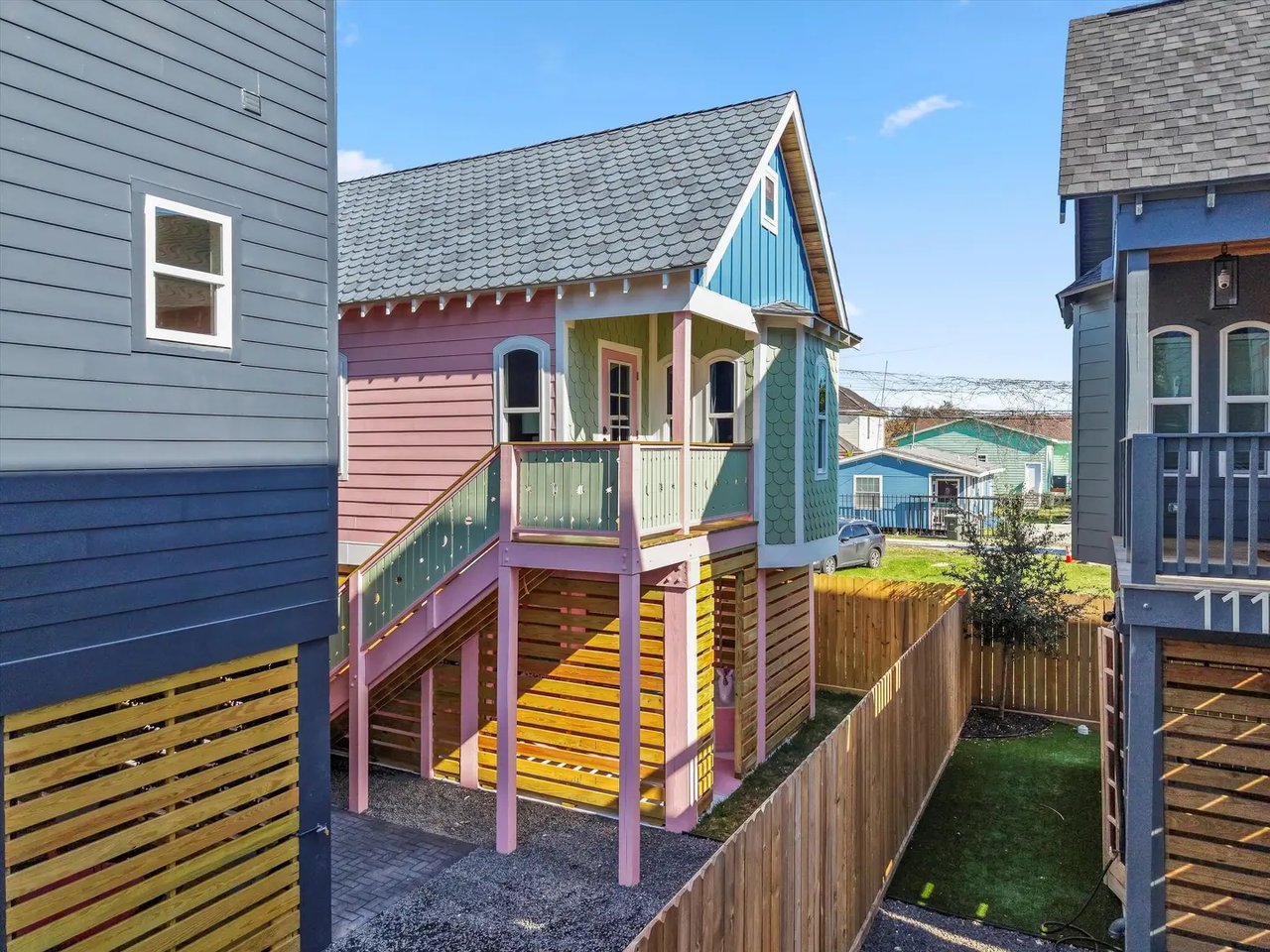
Discover a current example of tiny homes for sale in Houston that illustrate what these small‑footprint properties look like in real market conditions.
Together with the market insights in the Tiny Homes Houston guide, these resources help readers connect high‑level trends with real‑world opportunities.
Frequently Asked Questions
What's the difference between a tiny home, an ADU, and a manufactured home?
These terms get used interchangeably, but they're legally distinct. A tiny home is generally any dwelling under 400-600 square feet—it's a lifestyle descriptor, not a legal category. An ADU (accessory dwelling unit) is a secondary residence on a property that already has a primary home—think garage conversions or backyard cottages. Houston caps ADUs at 900 square feet. A manufactured home is factory-built housing that meets federal HUD code standards and is transported to the site. For investment and permitting purposes, the legal classification matters more than what you call it.
Can I live in a tiny home full-time in Houston?
Yes, if it's built to code and permitted as a dwelling. Houston requires a minimum of 120 square feet of living area and 150 square feet of sleeping area per city building codes. ADUs on your property are legal for full-time occupancy. The challenge is tiny homes on wheels (THOWs)—these are typically classified as RVs and cannot legally serve as permanent residences in most Houston neighborhoods, per Tiny House.
Those ROI numbers seem high. What's not included?
The 50-100% ROI figures cited are gross returns before expenses. Real-world costs that eat into profit include: Airbnb/VRBO platform fees (3-15%), property management (20-30% if you don't self-manage), cleaning and turnover costs, utilities, maintenance and repairs, vacancy periods, property taxes, insurance, and income taxes on rental revenue. A realistic net return after expenses is typically 15-30% for well-managed short-term rentals. Still strong—but not the headline number.
How long does the whole process take from decision to rental income?
Rough timeline for a new ADU build: 1-2 months for design and permitting, 6-8 months for construction (per HTX Tiny Homes), and 2-4 weeks for furnishing and listing setup. Total: 9-12 months minimum. Buying an existing tiny home or moving into a lot-rental community can compress this to 1-3 months. Galveston coastal construction typically adds time due to elevation requirements and inspections.
What's the minimum total investment to get started?
It depends on your path:
- Lot rental + basic structure: $15,000-$40,000 (structure) + $450-750/month lot fees
- ADU in your backyard: $90,000-$220,000 all-in (assuming you own the land)
- Land purchase + tiny home: $50,000-$150,000+ depending on location
- Turnkey Galveston vacation rental: $398,000+ (Delaney Heights model)
Budget an additional 10-15% for permits, insurance, furnishing, and contingencies.
Do I need to own land, or are there other options?
Three main paths: (1) Build an ADU on property you already own—lowest land cost, but requires existing homeownership. (2) Buy land and build—Houston County averages $11,752 per acre for tiny home land per LandSearch, though urban lots cost significantly more. (3) Rent a lot in a tiny home community—$450-750/month in communities like Majestic Hills or Lakewalk, with amenities included. Option 3 is fastest to income but means ongoing rent expense.
Is Galveston worth the extra insurance and building costs?
The math can work, but it's tighter. Galveston's average daily rates ($218-319/night) are significantly higher than Houston's ($139-143/night), and the island draws 7-8 million visitors annually. But insurance runs $4,000-6,000+ per year (flood + windstorm + homeowners combined), and coastal building codes add 20-40% to construction costs. You need strong occupancy and premium rates to offset these costs. The sweet spot is properties that can command $150+/night consistently—budget tiny homes may struggle to pencil out after insurance.
Who's actually renting tiny homes?
Short-term rental demand comes from: couples seeking unique getaway experiences, remote workers wanting a change of scenery, budget-conscious travelers (tiny homes often undercut hotel rates), and "tiny-curious" people test-driving the lifestyle. Long-term rental demand comes from: young professionals prioritizing location over space, retirees downsizing, and workers needing affordable housing near employment centers. Per Ruby Home, 73% of Americans would consider living in a tiny home, and women comprise approximately 55% of the tiny home community.
What's my exit strategy if I want out?
This is the weakest part of tiny home investing. Mobile tiny homes depreciate like vehicles—resale value drops over time. Fixed ADUs add value to your property (potentially 25-35% according to industry estimates), but you can't sell the ADU separately. Your realistic exits are: (1) continue renting for income, (2) sell the entire property (land + structures), (3) convert to long-term rental if short-term burns you out, or (4) sell the structure at a loss to someone who'll move it. Don't enter tiny home investing expecting appreciation—this is a cash flow play.
What could go wrong that would wipe out my investment?
Major risks include: Regulatory changes (short-term rental restrictions have swept other cities—Houston is permissive now, but that can change). Natural disasters (Houston flooded 68% of Harvey-damaged homes outside FEMA floodplains per Houston Chronicle—flood risk is real even in "safe" zones). Insurance cancellation or rate spikes (coastal insurance markets are volatile). Platform dependency (Airbnb policy changes can crater bookings overnight). Market saturation (too many tiny home rentals in one area can drive down rates). Mitigate by: choosing locations carefully, maintaining proper insurance, diversifying across platforms, and building a direct booking channel over time.
Interested in exploring tiny home opportunities in Houston or Galveston? Our team works with buyers, investors, and developers across all price points and property types. Contact Nan & Company Properties to start the conversation.
Sources
This article draws on research from:
- Houston Association of Realtors (HAR)
- Kinder Institute at Rice University
- Houston Public Media
- National Association of Realtors
- Texas Tribune
- City of Houston Planning Department
- Galveston Daily News
- Houston Chronicle
- Airbtics
Data current as of December 2025. Market conditions change; verify specific figures before making investment decisions.