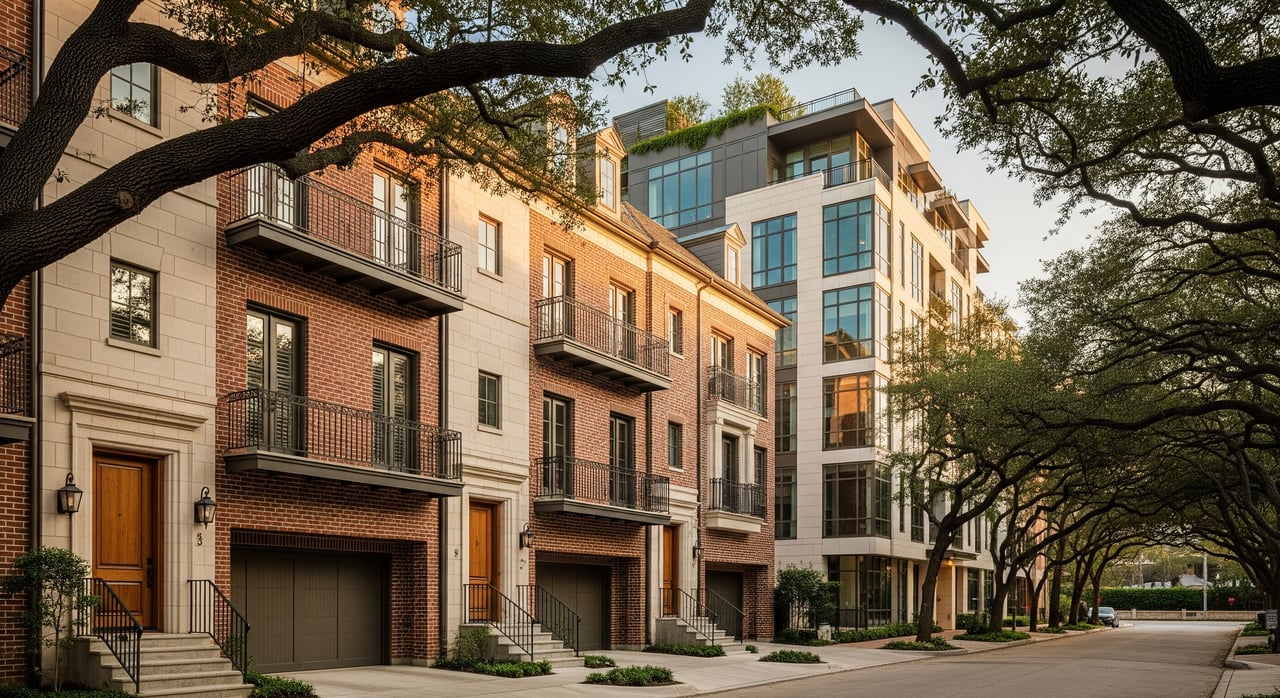
Trying to choose between a Houston townhome or a condo? Both options deliver urban convenience, but they differ in how you own, maintain, insure, and finance them. If you are eyeing The Heights, Montrose, or Uptown, understanding these differences helps you budget smartly and avoid surprises. In this guide, you’ll learn how ownership works, what HOA fees typically cover, how financing differs, and what lifestyle tradeoffs to expect in each neighborhood. Let’s dive in.
Ownership at a glance
In a condominium, you usually own the interior of your unit and share ownership of common elements like roofs, hallways, elevators, and amenities. Rules and responsibilities are set by the condo declaration, bylaws, and association policies.
In a townhome, Houston uses the term in two ways. Many townhomes in The Heights and Montrose are fee-simple, which means you own the land under the home and the structure itself. Others are built under a condominium regime, so they look like townhomes but function more like condos. The difference affects maintenance, insurance, and financing, so verify the legal structure before you fall in love with a property.
To confirm ownership type, check recorded documents with the Harris County Clerk and review classification details in Harris County Appraisal District (HCAD) parcel records. These sources help you see exactly what you are buying.
Why ownership type matters
- Control and maintenance: Fee-simple townhomes generally give you more control over the exterior and lot. Condo associations usually handle the building’s exterior and shared systems.
- Insurance: Condos rely on a master policy for common areas, while townhome owners typically insure the entire structure themselves.
- Financing: Some condo projects have extra lender requirements. Fee-simple townhomes are often financed like single-family homes.
- Taxes and appraisal: Fee-simple townhomes are appraised more like single-family homes, which can influence tax assessments and resale comparables.
Maintenance, HOA fees, and insurance
Who maintains what
- Condos: Associations typically maintain roofs, exteriors, structural systems, elevators, and shared amenities. You maintain your interior finishes and fixtures, with specifics outlined in the governing documents.
- Fee-simple townhomes: You are usually responsible for the exterior and roof unless the HOA documents state that the association manages those items. HOAs may still maintain private drives, landscaping, gates, or small shared amenities.
How fees typically compare
- Condos: Fees are often higher because they cover building systems, insurance, reserves, and amenities like pools, gyms, concierge, or security. High-rise buildings in Uptown/Galleria with extensive amenities tend to have higher monthly dues.
- Townhomes: Fees vary widely. Communities with minimal shared systems can have lower dues, while those that include exterior maintenance or amenities can be comparable to condos. Always review the budget and services line by line.
Insurance basics to verify
- Condos: You will usually buy an HO-6 policy for the interior and personal property. The association carries a master policy that may be “bare walls-in” or “single entity/all-in.” Confirm what the master policy covers so you can size your own coverage appropriately. For a clear overview, review the Insurance Information Institute’s condo and homeowners insurance basics.
- Townhomes: You will typically purchase an HO-3 policy that covers the structure and the lot, plus your personal property. Shared walls and proximity to neighbors can influence underwriting.
Association health and special assessments
Review the HOA’s budget, reserve study, and recent meeting minutes. Underfunded reserves can lead to special assessments for big-ticket items like roofs or structural repairs. The Community Associations Institute offers helpful context on how associations budget and plan reserves.
Flood risk in Houston
Flood risk varies street by street, even within the same neighborhood. Lenders require flood insurance if a property is in a Special Flood Hazard Area. To evaluate risk and potential costs:
- Check FEMA’s Flood Map Service Center for your flood zone.
- Use the Harris County Flood Control District for local floodplain information and drainage updates.
- Ask for flood history, elevation certificates, and related seller disclosures.
Financing, appraisal, and taxes
Lender requirements
- Condos: Some loans, including FHA and VA, require the building to meet project approval standards. If you plan to use these programs, confirm whether the building is approved early in your search. Start with HUD’s page on condominium project approval.
- Townhomes (fee-simple): These are usually treated like single-family homes by lenders, which can make financing more straightforward.
Appraisal and taxes
- Appraisals: Condos are appraised as individual units, with the building’s condition and amenities influencing value. Fee-simple townhomes are often valued more like single-family homes, including land value.
- Property taxes: All Houston properties are assessed by HCAD and taxed by local jurisdictions. Eligible homeowners can apply for the Texas homestead exemption on their primary residence, regardless of property type.
Resale considerations
- Condos: Resale strength depends on building condition, reserves, parking, rental and pet rules, and HOA fees.
- Townhomes: Many buyers prize a private entrance and outdoor space, especially in The Heights and Montrose, which can support demand if the property is well located.
For local pricing trends and velocity, review HAR’s market resources and focus on recent comps for your target neighborhood and property type.
Lifestyle fit by neighborhood
The Heights and Montrose townhome vibe
If you want a single-family feel with urban access, townhomes in The Heights and Montrose can be a great match. You often get a private entry, attached garage, and usable outdoor space like a patio or roof terrace. Many are fee-simple, though you should verify the title structure. These areas also offer strong walkability to local shops and dining.
Uptown/Galleria condo convenience
If you value lock-and-leave living with amenities, Uptown/Galleria’s mid-rise and high-rise condos are compelling. You gain proximity to shopping, restaurants, and major office centers, plus building services like pools, gyms, concierge, or controlled access. HOA fees reflect the level of service and the cost to operate building systems.
Parking, noise, and outdoor space
- Condos: Expect deeded garage parking or a shared structure. Noise can transfer from units above or below, depending on construction.
- Townhomes: You typically have a private garage and more immediate street access. Outdoor areas are usually larger than condo balconies, which is appealing for everyday living and pets.
Walkability and commuting
Both options can offer strong walkability inside the Loop. The Heights and Montrose are known for pedestrian-friendly local culture, while Uptown/Galleria provides dense shopping and quick access to major roads and job centers.
Buyer checklist: townhome vs condo
Use this checklist to compare specific properties side by side.
- Confirm legal title type: fee-simple or condominium regime via the Harris County Clerk and HCAD parcel records.
- Request and review HOA documents: declaration/CC&Rs, bylaws, rules, current budget, reserve study, financial statements, and meeting minutes for the past 12 to 24 months.
- Verify what the monthly fee covers: exterior maintenance, roof, elevators, landscaping, security, utilities, trash, and reserves. Note recent or pending fee increases.
- Review insurance: master policy type and limits for condos; obtain quotes for HO-6 or HO-3 policies. Get a flood insurance quote if the property is in or near a flood zone.
- Ask your lender early about condo project approval if you plan FHA or VA financing.
- Confirm parking and storage rights: deeded spaces, guest parking, and any storage units. Review pet policies, rental caps, and short-term rental rules.
- Check flood risk using FEMA maps and the Harris County Flood Control District. Request any elevation certificates and flood claim histories.
- Visit at different times of day to gauge noise, traffic, and parking.
- Review neighborhood comps and days on market using HAR and your agent’s MLS analysis.
Which is right for you?
Choose a townhome if you want more control over your exterior, a private garage, and outdoor space with a single-family feel. Choose a condo if you prefer low-maintenance living with services and amenities, especially in high-rise buildings near major shopping and business hubs. In Houston, the right fit often comes down to how you want to live day to day and how you want to allocate your monthly costs.
If you are comparing options in The Heights, Montrose, or Uptown, our team can help you evaluate HOA documents, financing paths, and neighborhood comps so you can move forward with confidence. Ready to find your best Houston fit? Connect with Nan & Co Properties to get started.
FAQs
What is the main ownership difference in Houston condos vs townhomes?
- Condos usually include ownership of the unit interior plus shared common elements, while many Houston townhomes are fee-simple, meaning you own the land and structure; always verify title type in county records.
How do HOA fees for condos compare to townhomes in Houston?
- Condo fees are often higher due to building systems, insurance, reserves, and amenities; townhome fees vary and can be lower if there are fewer shared services, but you may take on more direct maintenance.
Do Houston condos require special financing approvals?
- Some do. FHA and VA loans may require condo project approval, so check HUD’s condo resources and consult your lender early in the process.
How does flood risk impact Houston townhome and condo decisions?
- Flood risk depends on location, not property type. Use FEMA maps and the county flood control district to assess zones, then get flood insurance quotes and review any elevation certificates.
What should I review in a Houston HOA before buying?
- Request the declaration/CC&Rs, bylaws, rules, current budget, reserve study, financials, meeting minutes, master insurance policy, fee history, and any planned special assessments.