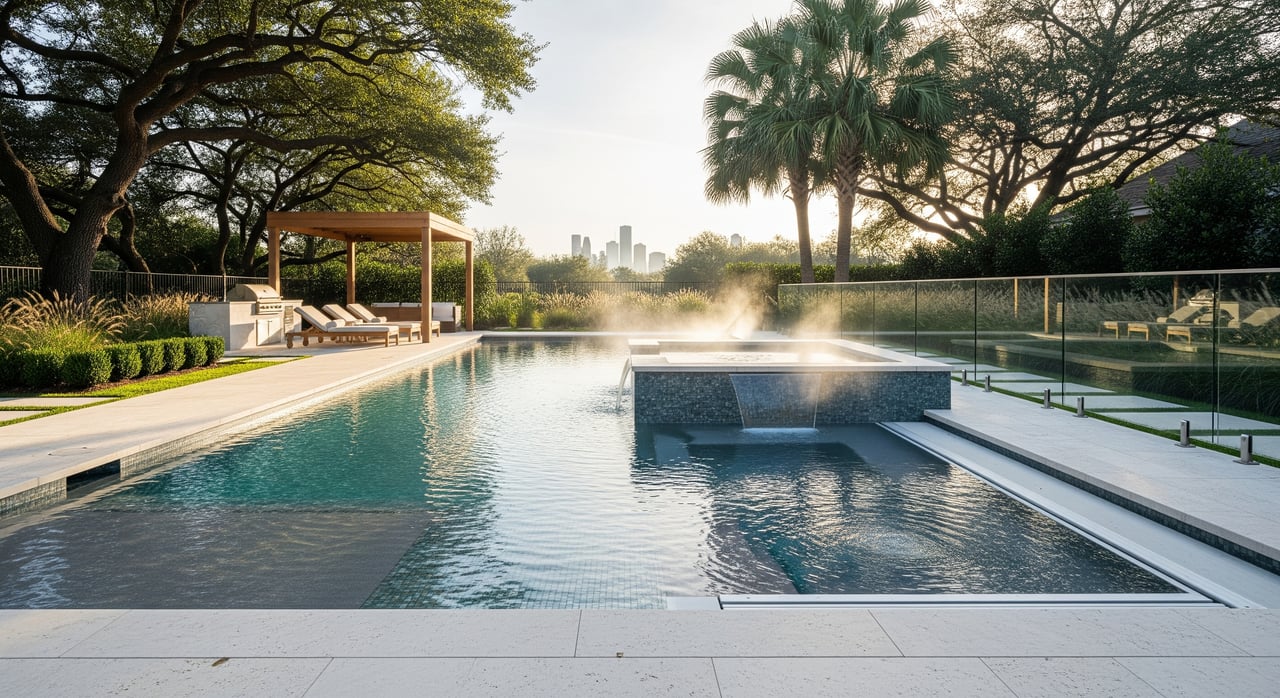
Houston pool season feels endless, which is part of the joy of living here. It also means your water works harder through heat, humidity, sudden downpours, and the rare hard freeze. If you want clear, comfortable water without constant headaches, a simple year-round plan tailored to Houston makes all the difference. Below is a practical schedule, target levels, and local tips to keep your pool ready whenever the sun comes out. Let’s dive in.
Why Houston pools need a plan
Houston’s subtropical climate brings hot summers, mild winters, and frequent heavy rain that can dilute chemicals and feed algae. Sunlight and high temperatures also break down chlorine faster. That is why you will see higher sanitizer demand in summer and after big backyard gatherings. Local weather can swing quickly, so smart maintenance smooths out those ups and downs.
- Learn the backdrop: Houston’s humid, storm-prone climate increases algae pressure and chemical demand. Climate details for Houston explain why conditions are unique here.
- Plan for extremes: While winters are usually mild, hard freezes do happen. Setting up freeze protection before cold snaps helps prevent equipment damage. See this local overview on preparing pools for freezes.
Your weekly care routine
A steady routine keeps surprises to a minimum.
- Before use or daily in heavy use: Check water clarity, skim debris, and confirm skimmer flow. When the pool will be busy, test free chlorine and pH. The CDC’s homeowner guidance supports frequent checks during heavy use. Review the CDC’s testing basics.
- Weekly tasks:
- Test and record free chlorine, pH, total alkalinity, and cyanuric acid. Brush walls and steps, vacuum, and empty baskets.
- Inspect equipment for leaks or unusual noises. Backwash or clean the filter when pressure rises from its clean baseline.
- Monthly: Run a full panel including calcium hardness. Deep-clean filters as needed and verify automation settings, including freeze protection.
Water chemistry targets
Keep these simple targets in mind to balance comfort, sanitizer strength, and equipment health.
- Free chlorine: 1 to 3 ppm as a baseline. Outdoor pools with stabilizer often run 2+ ppm for dependable sanitation. See the CDC’s target guidance.
- pH: 7.2 to 7.6 for comfort and sanitizer performance, within the broader 7.0 to 7.8 range.
- Total alkalinity: 80 to 120 ppm, which helps stabilize pH. Learn more about alkalinity’s role from AQUA Magazine.
- Cyanuric acid (stabilizer): 30 to 50 ppm for most outdoor residential pools. High CYA can reduce chlorine effectiveness and may require partial drain and refill to correct. See this overview on CYA buildup and management.
- Calcium hardness: 200 to 400 ppm for many plaster pools to limit scaling or etching.
Summer heat playbook
Houston summers increase chlorine demand and algae risk. Adjust your routine so the heat does not win.
- Test free chlorine and pH at least twice weekly, and daily during heavy use.
- Lengthen pump run times. Many owners run longer at lower speeds to improve filtration and save energy.
- Shock if combined chlorine appears or after big parties. Sun, heat, and bather load boost sanitizer needs. Get a quick explainer on how sun and storms affect water from this pool science overview.
Storm season checklist
From June to November, downpours and tropical systems can stir up your water chemistry.
- Before a storm: Secure covers, store portable gear, and take photos of equipment for potential claims. Avoid heavy chemical additions right before big rain that could wash them out.
- After a storm: Remove debris quickly. Test chlorine and pH, and shock if runoff or floodwater reached the pool. If flooding occurred, consider a professional inspection.
Winter freeze readiness
Most winters are easy, but do not get caught off guard by an Arctic blast.
- Verify freeze protection on your automation each fall. Ensure sensors and setpoints are correct.
- If a freeze is forecast, keep water circulating and prepare for possible power loss. In high-risk scenarios, consult a pro on short-term winterizing.
- After a hard freeze, do not restart pumps or heaters if you suspect damage. Schedule an inspection first. See local advice on freeze preparation.
Equipment upgrades that save
Upgrading circulation can improve water clarity and lower bills.
- Variable-speed pumps are now the standard replacement for older single-speed models. They commonly save 50 to 70 percent or more on pump energy by running slower for everyday filtration and faster only when needed. Learn how they reduce costs in this DOE Building America guide.
- Covers help retain heat, cut evaporation, and reduce chemical use, especially in shoulder seasons.
Safety and compliance basics
Keep safety top of mind for swimmers and equipment.
- Drain safety: Ensure main drains and suction outlets have compliant covers and are in good condition. The federal Virginia Graeme Baker Pool and Spa Safety Act sets standards to prevent entrapment. Read more about the VGBA safety law.
- Teach children to avoid drains and suction fittings. Replace broken covers immediately.
Draining water the right way
Pool water can harm local bayous and wildlife if discharged improperly.
- Most municipalities prohibit sending chlorinated water to storm drains. Preferred options often include dechlorinating to a non-detectable residual, then slowly discharging onto a vegetated area on your property without runoff. See examples of common municipal guidance from Brushy Creek MUD and Fairfax County.
- Rules vary by city and county. In Houston, check current guidance with the City or Harris County and call 311 before any large discharge.
Monthly and seasonal checklist
Use this quick reference to stay ahead of problems.
- Monthly: Full chemical panel, filter deep-clean as needed, inspect seals and o-rings, confirm automation and freeze protection.
- Spring: Rebalance water, verify CYA, and extend run times before heat and heavy use.
- Summer: Test more often, run longer on low speed, and shock after big parties or storms.
- Fall and winter: Leaf control, consistent testing, and freeze prep checks.
Plan for resale value
A well-maintained pool photographs better, shows better, and reassures buyers during inspections. Clear records of your testing and service help tell a confident story about the home’s care. If you expect to sell within a year, start documenting water tests and maintenance now to support a smooth transaction.
Ready to align pool care with your home goals in Houston? Whether you are preparing to sell a pool home or searching for the right backyard oasis, the team at Nan & Co Properties can guide your next move with local expertise and concierge support.
FAQs
How often should a Houston homeowner test pool water?
- Test free chlorine and pH at least twice a week, and daily in summer during heavy use or after storms, with a full panel monthly.
What chemistry targets keep water clear and comfortable?
- Aim for free chlorine around 1 to 3 ppm, pH 7.2 to 7.6 within a 7.0 to 7.8 range, alkalinity 80 to 120 ppm, CYA 30 to 50 ppm, and calcium hardness 200 to 400 ppm.
How should I prepare my pool before a major storm?
- Secure covers and gear, avoid heavy chemical additions, and plan to test and shock after the storm if runoff or floodwater enters the pool.
What is the simplest way to protect equipment during a freeze?
- Confirm freeze protection on your automation, keep water circulating during cold snaps, and arrange a professional inspection before restarting equipment if damage is suspected.
Can I drain my pool into the street in Houston?
- Generally no, since storm drains flow to waterways; dechlorinate and follow local guidance, or discharge to a vegetated area on your property without runoff after confirming current city or county rules.